2026 Roof Inspections Made Easy with Drones
- Lyra Anderson
- Nov 28, 2025
- 3 min read

Updated: Dec 22, 2025

Roof inspections have traditionally been labor-intensive, time-consuming, and sometimes risky. Climbing ladders, walking on scaffolding, and manually documenting damage are standard procedures but in 2026, this is changing.
Thanks to drone-integrated inspection workflows, construction teams, property managers, and insurers can now access accurate, actionable roof reports in real time often right on a mobile device.
Whether it’s a residential development in Dublin, a commercial project in Cork, or a high-rise in New York, drones are simplifying inspections, improving safety, and delivering data-driven insights that directly impact decision-making.
Why Traditional Roof Inspections Are Challenging
Roof inspections have always carried inherent difficulties:
Risk of falls or injuries for inspectors
Weather-dependent delays
Inconsistent documentation and reporting
Long inspection times on large or complex roofs
In Ireland, unpredictable weather often disrupts traditional inspections, while U.S. projects face the additional challenge of covering expansive or multi-story commercial roofs. These factors create delays, increase costs, and limit the frequency of maintenance checks.
Drones eliminate many of these obstacles, allowing teams to capture high-resolution imagery, thermal data, and 3D measurements quickly and safely, without disrupting other site operations.
How Drones Transform Roof Inspections in 2026
Drone-integrated roof inspections combine UAV technology, thermal sensors, high-resolution cameras, and cloud-based reporting. This combination delivers several advantages:
1. Faster Data Collection
A drone can scan an entire roof in minutes, whereas manual inspections might take hours or even days. Multiple sensors can capture visual, thermal, and LiDAR data simultaneously for comprehensive analysis.
2. Early Detection of Issues
Thermal imaging identifies moisture, insulation gaps, or heat loss, while high-resolution cameras detect cracks, damaged shingles, or structural defects before they become costly repairs.

3. Instant, Accessible Reports
Data is processed into structured reports and dashboards accessible on tablets or smartphones. Stakeholders can review roof conditions remotely, make informed decisions, and coordinate repairs without being on-site.
Key Benefits for Construction and Property Teams
Labor Savings
Drones remove the need for teams to climb roofs or set up scaffolding. A single certified pilot can replace multiple inspectors, freeing staff to focus on project management rather than data collection.
Time Efficiency
Complete roof scans that previously took hours can now be done in under 30 minutes, making it possible to inspect multiple buildings in a single day. Seasonal weather windows in Ireland or tight construction schedules in the U.S. no longer delay inspections.
Enhanced Safety
Reducing human exposure to heights, unstable structures, and adverse conditions minimizes accidents. Thermal sensors also reduce the need for intrusive physical testing.
Data-Driven Decisions
Digital roof reports enable construction managers, facility operators, and insurers to make decisions based on evidence. Predictive maintenance, repair prioritization, and budget planning become far more precise.
Real-World Applications in 2026
Residential and Commercial Projects
A Dublin-based construction firm can complete inspections of entire housing developments efficiently, ensuring safety and compliance. Similarly, U.S. property managers can monitor multi-story office buildings for maintenance needs or insurance purposes.
Post-Storm or Emergency Assessments
After storms or heavy rainfall, drones quickly assess damage, identify unsafe areas, and provide actionable aerial reports. Emergency response and insurance teams reduce both risk and downtime.
Preventive Maintenance Programs
Ongoing drone inspections allow teams to detect small issues before they escalate, extending roof life and minimizing unexpected repairs for industrial, commercial, and public buildings.
How Drone-as-a-Service Supports Roof Inspections
Many organizations rely on Drone-as-a-Service (DaaS) rather than maintaining in-house teams. The benefits include:
Scalability: Deploy drones across multiple sites without managing pilot staff.
Compliance: Adhere to FAA Part 107 in the U.S. and Irish aviation standards.
Secure Data Handling: Cloud-based platforms ensure safe storage and sharing of inspection reports.
Expert Analysis: Certified pilots and analysts deliver actionable insights, not just images.
The 2026 Advantage: Roof Reports in Your Hand
In 2026, roof inspections are no longer slow, risky, or cumbersome. Drone integration has transformed them into:
Fast, safe, and accurate workflows
Mobile-accessible reports for instant decision-making
Proactive maintenance and cost avoidance
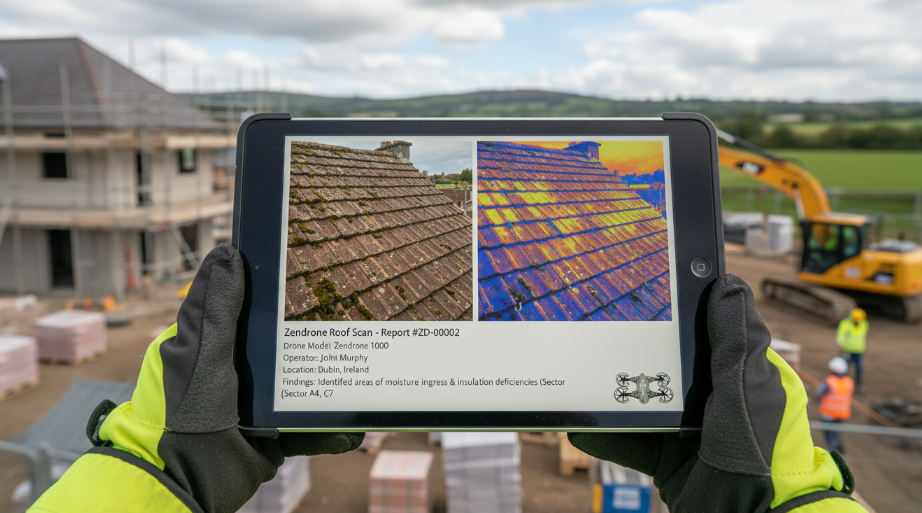
For Irish construction projects, these tools provide the precision, safety, and speed needed to keep construction projects across Ireland on schedule. Similarly, U.S. teams benefit from scalability and compliance across large or complex sites.
By adopting drone-integrated inspections, organizations are moving from reactive maintenance to data-driven, predictive workflows, putting control and insight directly in the hands of decision-makers.

Comments