How Drones Help Reduce Discrepancies Between Planned and Actual Construction
- Lyra Anderson
- May 13
- 3 min read

Introduction
Almost every construction project starts with a clean plan.
Drawings are approved, timelines are established, budgets are calculated, and everyone assumes work will follow the schedule closely. But once construction begins, reality tends to move differently.
Site conditions change. Work gets delayed. Measurements vary slightly from the original design. One trade finishes late, another adjusts around it, and before long the project on paper no longer fully matches what is happening on-site.
That gap between planned and actual construction is where many project problems begin.
Drones are helping construction teams close that gap by giving project managers a more accurate and consistent view of what is actually happening across the site.
Why Construction Discrepancies Happen So Often
Large projects involve constant movement.
Multiple contractors work simultaneously, schedules shift, and site conditions evolve daily. Even with experienced teams and strong planning, discrepancies happen because:
Progress updates are delayed
Site visibility is limited
Measurements are manually recorded
Issues are discovered too late
By the time inconsistencies appear in reports, they may already be affecting cost, scheduling, or quality.
The Problem with Traditional Site Monitoring
Most project tracking still depends heavily on:
Manual inspections
Ground-level photos
Written reports
Periodic walkthroughs
The issue is that these methods only show part of the picture.
On large construction sites, it’s difficult for managers to maintain full visibility across every active work area. Small deviations from the plan can go unnoticed for weeks until they become expensive to correct.
What Drone Monitoring Changes
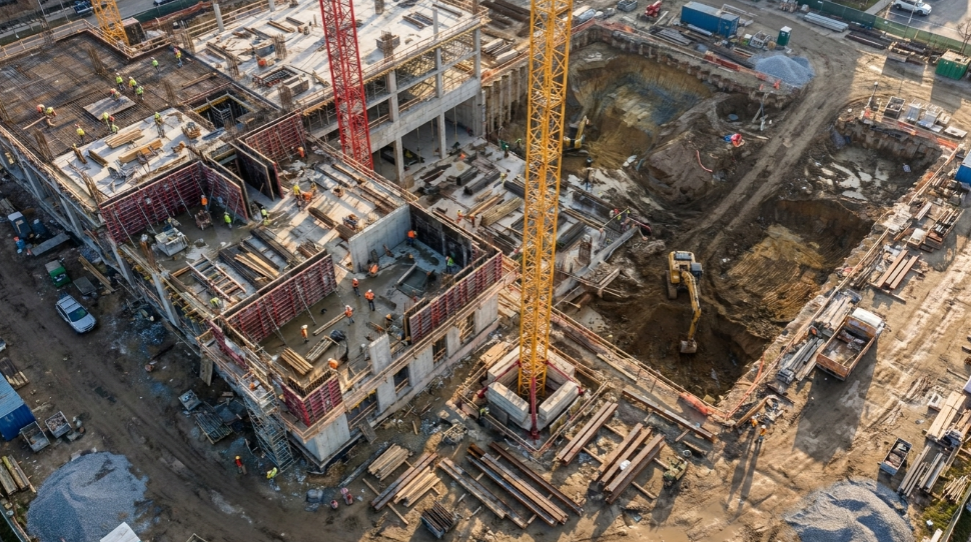
Drone surveys provide a complete aerial overview of the site at regular intervals.
Instead of relying only on fragmented updates, teams receive:
Accurate site imagery
Current progress records
Measurable construction data
Full-site visibility from above
This allows project teams to compare what was planned with what has actually been built.
How Drones Help Reduce Construction Discrepancies
Verifying Work Against Design Plans
Drone mapping makes it easier to compare site conditions with approved project drawings.
Teams can verify:
Structural placement
Excavation boundaries
Grading levels
Utility routes
Material stockpile locations
This helps identify mismatches early before additional work builds on top of them.
Catching Problems Earlier
Construction mistakes become more expensive the longer they remain unnoticed.
Regular drone flights help teams detect:
Incorrect layout positioning
Delayed work areas
Incomplete installations
Coordination issues between trades
Early visibility allows corrections before problems spread into later project phases.
Improving Progress Accuracy
One of the biggest challenges in construction management is understanding actual project status.
Drone reporting provides visual confirmation of:
Completed work
Active work zones
Areas falling behind schedule
This creates a more accurate picture of project progress than written updates alone.
Supporting Better Communication Across Teams
Discrepancies often grow when teams work from different information.
Drone imagery gives contractors, engineers, consultants, and project managers a shared visual reference point.
Instead of debating site conditions, everyone reviews the same up-to-date data.
That clarity improves coordination across the project.
Reducing Rework
Rework is one of the most expensive consequences of construction discrepancies.
When mistakes are identified late, teams may need to:
Remove completed work
Reorder materials
Adjust schedules
Reallocate labour and equipment
Drone monitoring reduces this risk by helping teams identify deviations while corrections are still manageable.
Real Benefits Beyond the Site
Better Cost Control
When discrepancies are caught early, projects avoid unnecessary labour, material waste, and schedule overruns.
Small corrections remain small.
Stronger Documentation
Drone reporting creates time-stamped records of construction progress throughout the project lifecycle.
This documentation supports:
Contractor accountability
Client reporting
Quality assurance reviews
Dispute resolution
Improved Decision-Making
Project managers make better decisions when they have accurate, current site visibility.
Drone data helps leadership teams respond faster and plan more effectively.
Where Drone Monitoring Is Most Valuable
Drone tracking is especially useful on:
Large commercial developments
Infrastructure projects
Multi-phase construction sites
Earthworks and grading operations
Remote or hard-to-access sites
The larger and more complex the project, the more valuable consistent aerial visibility becomes.
Making Drone Monitoring Part of Daily Operations
Construction firms seeing the biggest improvements usually integrate drone reporting into regular workflows.
Typical process includes:
Scheduled drone flights throughout the project
Comparing imagery with project plans and schedules
Reviewing discrepancies during coordination meetings
Taking corrective action quickly when issues appear
Consistency is what keeps projects aligned over time.
The Shift Toward More Measurable Construction Management
Construction projects are becoming increasingly data-driven.
Owners, contractors, and developers want clearer visibility into:
Progress
Quality
Budget performance
Schedule alignment
Drone construction monitoring supports that shift by turning site activity into measurable information instead of assumptions.
Conclusion
Discrepancies between planned and actual construction are difficult to avoid entirely. But they become far easier to manage when teams can see problems clearly and early.
Drones help construction teams maintain that visibility.
By improving site tracking, validating progress, and reducing blind spots across projects, drone monitoring helps teams stay closer to the original plan while avoiding costly surprises later.
In construction, the sooner problems are visible, the easier they are to fix.


Comments