How Real-Time Site Intelligence Is Transforming Large Construction Projects
- Lyra Anderson
- Feb 23
- 2 min read

Updated: Feb 25
Managing large construction projects is like orchestrating a complex symphony. Multiple teams, heavy machinery, materials, and schedules must all align perfectly. Historically, site intelligence came from manual inspections, progress reports, and occasional photos a process slow, fragmented, and prone to human error.
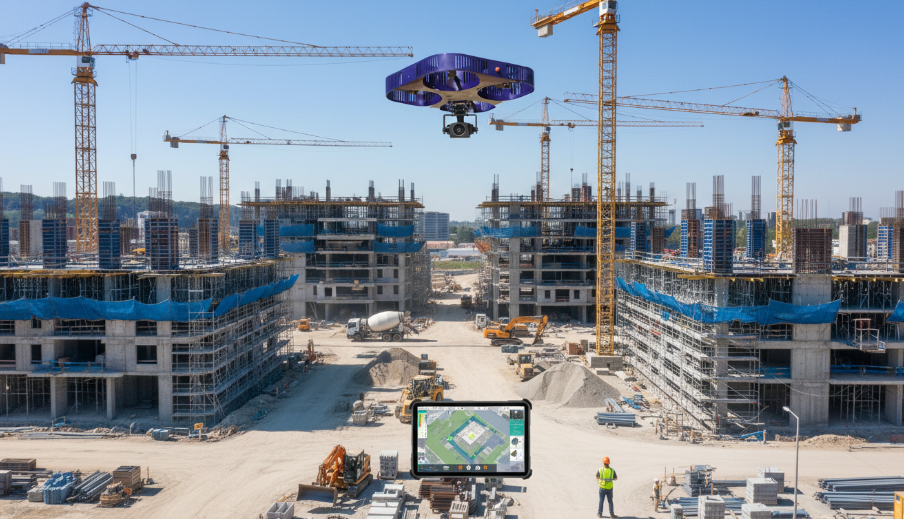
Today, real-time site intelligence is transforming how large projects are planned, monitored, and executed. By leveraging aerial data, sensors, and digital platforms, construction managers gain actionable insights instantly. Projects are no longer reactive; they become predictable, measurable, and controllable.
The Limits of Traditional Oversight
Relying on conventional methods has significant drawbacks:
Delayed progress reporting
Inconsistent data collection
Blind spots in large or multi-phase sites
Time-consuming manual inspections
Difficulties in validating contractor claims
These limitations often lead to cost overruns, schedule delays, and safety risks.
What Real-Time Site Intelligence Brings
Real-time site intelligence uses drones, sensors, and cloud-based software to provide:
Continuous monitoring of site conditions
Up-to-date 3D models and progress maps
Accurate measurements for earthworks and material quantities
Immediate detection of deviations from plans
Remote collaboration with stakeholders
By converting visual and sensor data into actionable intelligence, managers can make informed decisions on the spot rather than waiting for reports to be compiled.
Benefits for Large-Scale Projects
Implementing real-time site intelligence offers multiple advantages:
Faster decision-making: Identify delays or issues immediately
Improved accuracy: Consistent data collection across vast areas
Cost control: Reduce rework and material wastage
Enhanced safety: Monitor high-risk zones without sending personnel
Transparent reporting: Keep stakeholders informed with visual, time-stamped evidence
For multi-phase projects, this means fewer surprises and smoother progress.
Enhancing Collaboration and Accountability
Large construction sites involve multiple contractors and subcontractors. Miscommunication and delayed updates can cause mistakes and disputes.
Real-time intelligence provides a single source of truth:
Everyone accesses the same live data
Delays and progress can be verified instantly
Subcontractor performance is trackable
Disputes over work completion are minimized
This transparency fosters accountability and trust between teams and stakeholders.

Long-Term Value of Real-Time Data
Real-time site intelligence is not just about today’s work. Historical datasets create long-term value:
Track productivity trends across phases
Improve planning for future projects
Benchmark performance against similar developments
Document compliance and safety records
Firms that adopt these systems gain both operational efficiency and strategic intelligence for future projects.
The Role of Professional Drone Services
Accuracy and reliability depend on expertise. Partnering with licensed drone services in construction ensures:
Safe, regulated drone operations
Calibrated sensors and consistent flight paths
High-quality aerial imagery and 3D mapping
Seamless integration of data into project workflows
For projects in Ireland, professional drone services in Ireland guarantee compliance with aviation rules while delivering actionable insights.
Conclusion
Real-time site intelligence is transforming large construction projects. By providing immediate, measurable, and actionable data, it reduces delays, prevents costly errors, enhances safety, and strengthens collaboration.
Companies adopting this approach gain a clear competitive advantage, turning complex construction sites into trackable, manageable, and strategically informed assets.


Comments